Ears Wide Open: How Long-Form Audio Is Rewiring the Way Americans Actually Listen
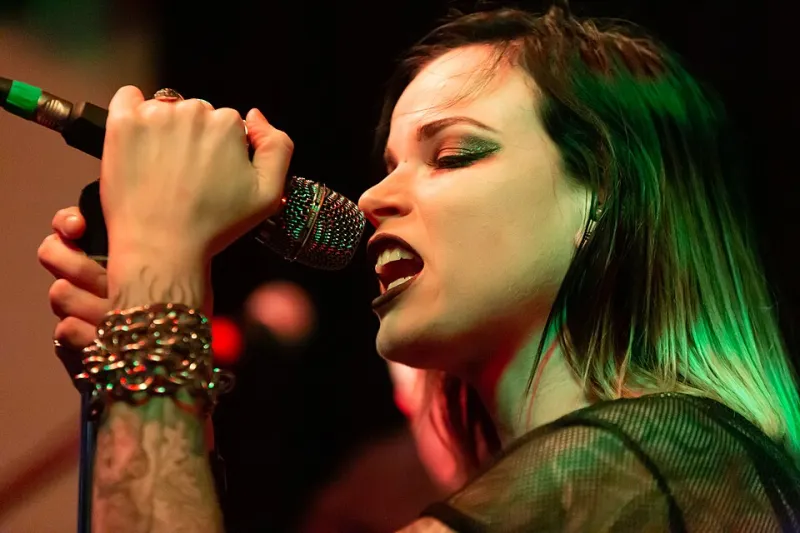
Photo: Steffen Prößdorf, CC BY-SA 4.0, via Wikimedia Commons
There's a moment — usually somewhere around mile two of a morning run or the third red light of a commute — where the podcast you're listening to stops being background noise and becomes the only thing that exists. The host's voice locks in. The story pulls tight. And somewhere in your brain, something genuinely different starts happening.
This isn't just good content doing its job. According to researchers studying auditory cognition, the shift from passive music listening to engaged narrative audio is a measurably distinct neurological experience. And for tens of millions of Americans, that shift has become a daily ritual.
The Brain on Story vs. the Brain on Song
Music and narrative audio don't just feel different — they process differently. When you're riding out a playlist, your brain engages primarily with the limbic system, the emotional core. It's reactive, associative, and largely automatic. Songs trigger memories, moods, and physical responses almost without asking permission.
Podcasts ask for something more deliberate. Language-heavy audio activates Broca's and Wernicke's areas — the brain's language processing centers — while simultaneously pulling in the prefrontal cortex for narrative tracking and comprehension. You're not just feeling; you're following. You're constructing a mental timeline, holding characters in your working memory, and making predictions about where the story is headed.
Cognitive scientists describe this as a higher-load listening state. And far from being exhausting, many regular podcast listeners report it as deeply restorative — a focused mental engagement that crowds out the ambient anxiety of scrolling, notifications, and the relentless low hum of modern overstimulation.
"It's almost meditative in the way it works," says Dr. Alicia Moreno, a cognitive neuroscientist based in Austin who studies auditory attention. "You're giving your mind a single thread to follow. That kind of directed focus is increasingly rare, and people are hungry for it."
From Shuffle to Story: The Escape from Algorithmic Playlists
For years, streaming platforms trained listeners to be passive. Hit shuffle. Let the algorithm decide. Skip anything that doesn't hook in the first eight seconds. It was convenience dressed up as personalization, and for a while, it worked beautifully.
But something started to feel hollow. Listeners began noticing that their carefully curated Discover Weekly playlists all sounded vaguely the same — polished, inoffensive, and weirdly forgettable. The algorithm optimized for engagement metrics, not meaning.
Podcasts offered a counter-experience. Here was audio that demanded your time, rewarded your patience, and didn't care whether you'd skip ahead. The format is inherently anti-algorithmic in spirit: you commit to an episode, you follow a host's perspective, you sit with complexity. There's no shuffle button for a three-part investigative series.
"Listeners are done being served," says Marcus Webb, a Brooklyn-based podcast producer whose true crime and culture shows have collectively pulled over 80 million downloads. "They want to choose something and go deep. That's a completely different relationship with audio than what the streaming era trained people to have."
The New Campfire
There's a reason podcast listeners talk about their favorite hosts the way they talk about close friends. Parasocial relationships aren't new, but the intimacy of voice — unfiltered, close-mic'd, often recorded in someone's actual home — creates a particular kind of connection that TV and social media can't quite replicate.
Voice carries more emotional nuance per second than almost any other communication medium. Micro-variations in tone, breath patterns, pacing, and hesitation all transmit meaning that our brains decode rapidly and often unconsciously. When a host laughs, pauses, or stumbles over a word, listeners feel it. The imperfection is the intimacy.
In an era defined by carefully filtered images and algorithmically optimized content, a human voice talking honestly into a microphone feels almost radical. It's no accident that some of America's most culturally influential conversations — about race, politics, grief, wellness, and identity — are happening in podcast form rather than in print or on screen.
The Sound of Community
The podcast renaissance has also quietly rebuilt something the music streaming era eroded: shared listening culture. When Spotify replaced the record store and the mix CD with private, personalized streams, a lot of the social fabric around audio went with it. You couldn't easily share what you were listening to or talk about it with people who'd heard the same thing.
Podcast communities operate differently. Reddit threads, Discord servers, and live listener events have grown up around shows in ways that feel closer to the old music fan club model than anything streaming platforms have managed to generate. People finish an episode and immediately want to process it with someone else.
That communal dimension feeds back into the listening experience itself. Knowing that thousands of other people are sitting with the same episode, tracking the same story, reacting to the same twist — it transforms what is technically a solo activity into something that feels collective.
What This Means for Audio Culture
Here at Sonirai, we think a lot about what it means for sound to become a genuine experience rather than ambient furniture. And the podcast boom is one of the clearest examples we've seen of that principle playing out at scale.
Americans aren't just listening more — they're listening differently. They're carving out intentional time for long-form audio the way a previous generation carved out time for a favorite TV show. They're paying for ad-free subscriptions, buying premium headphones specifically for podcast listening, and making hosts part of their daily emotional vocabulary.
This isn't a pivot away from music. It's an expansion of what audio can mean in a life. The playlist still has its place. But so does the 90-minute deep dive into the history of a forgotten American city, or the two comedians workshopping ideas for two hours, or the journalist spending six episodes unraveling a single true story.
The brain, it turns out, was always ready for this. We just needed the format to catch up.