What the Quiet Is Telling You: The Forgotten Power of Silence in Music
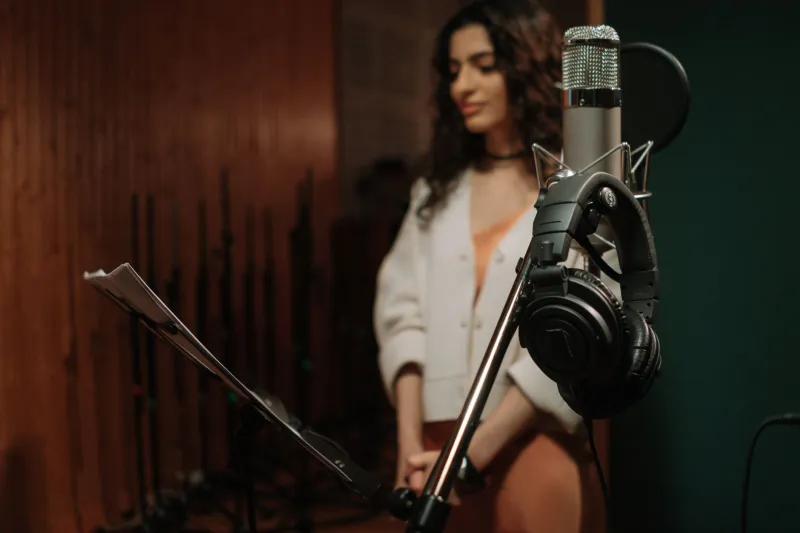
There's a moment near the end of a Kendrick Lamar verse — you probably know the one — where everything just stops. The beat drops out, the bass disappears, and for maybe half a second you're left with absolutely nothing. And somehow, that nothing hits harder than anything that came before it.
That's not an accident. It never is.
In a culture that's essentially trained itself to equate constant audio stimulation with good listening, we've quietly — no pun intended — lost our appreciation for one of music's oldest and most powerful compositional tools: the deliberate, strategic pause.
The Architecture of Absence
Musicologists have a fancy term for it: negative space. Borrowed from visual art, it describes the areas in a composition that are intentionally left empty to give the surrounding elements more weight and meaning. In music, that translates to rests, held breaths, sudden drop-outs, and the kind of pregnant silence that makes your chest tighten before the drop.
"Silence is structural," says one Brooklyn-based composer who scores for film and television. "You can't just think of it as the absence of sound. It's load-bearing. Remove it, and the whole emotional architecture of a piece can collapse."
Classical composers understood this intuitively. Beethoven was notorious for his dramatic rests — those sudden, full-orchestra silences that felt like the musical equivalent of a sharp intake of breath. Mahler used long, uncomfortable pauses that left audiences genuinely unsure whether the performance had ended. The silence wasn't empty. It was full of something — tension, grief, anticipation, awe.
What those composers figured out centuries ago, modern producers are rediscovering in studios across the country.
The Producer's Perspective
Talk to any experienced audio engineer about silence and you'll get the same knowing nod. "It's the most misunderstood element in a mix," explains one Nashville-based producer who's worked across country, R&B, and indie rock. "New artists always want to fill every single moment. They're scared of the quiet. But the quiet is where your listener leans in."
That leaning-in effect is more than metaphorical. Psychoacoustics — the study of how humans perceive sound — has shown that abrupt silences following loud passages actually trigger a mild stress response in listeners. Your brain, wired for survival, briefly interprets sudden quiet as a potential threat. Your attention sharpens. Your heart rate ticks up slightly. And then, when the music returns, the emotional release is amplified.
In other words, silence makes the sound that follows it hit harder. Every time.
Hip-hop producers have been weaponizing this for decades. Listen to the space in classic J Dilla beats — the way the drum patterns breathe, the micro-pauses that give the groove its humanity. Or the ice-cold silence Rick Rubin famously stripped into his productions, pulling back instrumentation until only the most essential elements remained. The result wasn't sparse. It was devastating.
Streaming Culture and the Death of the Rest
Here's where things get a little uncomfortable. The way most Americans consume music today — algorithmically curated playlists, autoplay queues, background listening while scrolling — isn't exactly designed to honor the pause.
Streaming platforms optimize for engagement metrics, and silence doesn't register as engagement. There's even a technical threshold: tracks with more than a few seconds of silence at their beginning or end can get flagged or skipped by algorithms before they even get going. Some artists have reportedly trimmed their intros specifically to avoid the skip penalty.
"The algorithm doesn't understand restraint," says one audio engineer who works with independent artists in Los Angeles. "It just sees dead air and penalizes it. So artists learn to fill every second, and we end up with music that's exhausting to actually listen to."
This isn't just an industry problem — it's a listener problem. Years of constant-stimulation consumption have recalibrated our tolerance for quiet. Silence in a song can now feel like a glitch, an error, something to be skipped past rather than sat with. We've forgotten how to let music breathe.
What You're Actually Feeling When the Music Stops
There's a reason certain songs stop you mid-task. You're washing dishes, half-listening, and then suddenly the music pulls back, and you find yourself standing still, dish in hand, waiting.
That's the pause doing its job.
Psychologists who study emotional responses to music point out that anticipation is one of the most powerful affective states music can induce. And silence is anticipation in its purest form. It tells your nervous system: something is coming. The longer and more deliberate the pause, the more charged the return of sound becomes.
This is why a simple drum fill followed by silence before a chorus can feel more emotionally satisfying than a technically complex instrumental passage. The brain isn't just processing notes — it's processing the shape of the experience, and silence gives that shape its contours.
Some composers take this even further. John Cage's infamous 4'33" — a piece in which the performer plays nothing for four minutes and thirty-three seconds — was a radical argument that ambient sound itself is music, and that silence reframes everything around it. Whether or not you buy the conceptual art angle, the experience of sitting in a concert hall and listening to nothing has reportedly moved people to tears. The absence became the presence.
Learning to Hear What Isn't There
So what does this mean for how you actually listen?
For starters, it might be worth occasionally pulling yourself out of background-listening mode and giving a favorite album your full attention — headphones on, phone down, no multitasking. Notice where the music pulls back. Notice the rests. Notice the moments where a producer chose not to add another layer.
Try listening to an older record that you love and paying specific attention to the space between phrases. Jazz is incredible for this — the conversation between instruments is as much about what each player doesn't play as what they do. Miles Davis built an entire aesthetic philosophy around the power of the withheld note.
And the next time a song you're listening to goes briefly quiet and your instinct is to reach for your phone — resist. Sit in it for a second. Let the silence do what it was designed to do.
You might be surprised how loud it gets.
The Quiet Comeback
There are signs that at least some corners of the music world are pushing back against the relentless fill. Ambient artists, post-rock acts, and a growing wave of independent composers are building entire sonic identities around restraint. Albums designed for intentional listening — sometimes called "slow listening" experiences — are finding devoted audiences among people who are genuinely tired of music as wallpaper.
Even in pop, producers are quietly experimenting with space again. A well-timed half-beat of silence before a chorus is showing up in more mainstream tracks than it has in years. Listeners are responding.
Maybe we're remembering something we always knew: that what a song withholds from you is part of the gift. That the pause is not an interruption of the music. It is the music — just in a different form.
Silence, it turns out, has a lot to say.